Wednesday, April 20, 2011
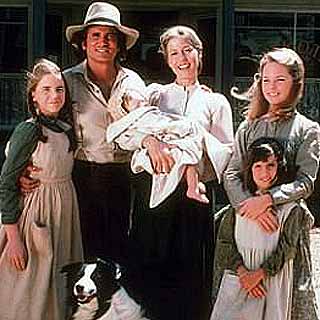
Not Disney :( But still awesome!!!
Sunday, April 3, 2011
Monday, March 21, 2011
Chapter 33 Study Questions
63 #2) With Germany "teetering on the brink of mad anarchy" sensible statesmen began to urge that war debts and reparation be drastically scaled down or even canceled. Americans did not look fondly on the new proposals. The admin insisted that there was no link between debts and reparations.

65) The Dawes Plan of 1924 rescheduled German reparation payments and opened the way for further American private loans. The US was willing to loan money to Germany because then Germany could pay back the Allies, and the Allies could pay back the US.
66) The US never did get its money; instead the "harvested a bumper crop of ill will", they were essentially disliked everywhere in Europe.
67) Political liabilites of presidential canidate Alfred E. Smith
- "wet" when country was still devoted to "noble experiment" of prohibition
- abrasively urban
- Roman Catholic in a overwhelmingly Protestant country
68) Radio was the new technology used for the first time in the presidential election of 1928. It benefited Herbert Hoover the most; Smith could not manage to send his "personal sparkle" through the radio, whereas Hoover sounded better on the radio than in person.
href="http://americanhistory.si.edu/presidency/images/medium/09_G_012_M.jpg">
69) Hoover was a living example of the American success story and "an intriguing mix of two centuries" because he was a poor orphan boy that had managed to make to Stanford Univ, he absorbed the 19th cent copybook on maxims of industry, thrift, and self-reliance: and he became extremely successful as an engineer and businessman.
70) Hoover's Cons: quite shy, standoffish, and stiff. Personally colorless in public, thin-skinned in the face of criticism, did not adapt readily to the necessary give and take of policital accomodation.
Hoover's Pros: traveled and worked abroad extensively, deep determination, strong faith in American individualism- free enterprise- and small goverment. Integrity, humanitarianism, passion for assembling the facts, efficiency, talents for admin, and ability to inspire loyalty in close associates.
71) Some anti-Smith slogans of some of Hoover's (irresponsible) supporters: " A vote for Al Smith is a vote for the Pope"; "Rum, Romanism, and Ruin."; and " city slicker"
72) The fact that many Democrats (especially in the South) were offended by the "wettish, Catholicism, foreignism, and liberalism" of their own party's candidate resulted in many Democrats supporting Hoover, who enjoyed a landslide victory. Hoover was the first Republican candidate (except for Harding's TN victory in 1920) to carry a state that had suceded. [He swept 5 states of the former Confederacy as well as all of the Border states].
Wednesday, March 9, 2011
Monkey Business in Tennessee

More and more states were starting to pass law's requiring kids to remain in school until a certain age or until they had graduated.
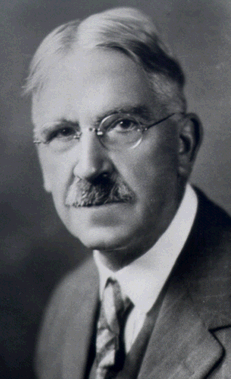
"Most revolutionary contribution to educational theory" during this time was Professor John Dewey ( faculty of Columbia Univ) Brought principle of " learning by doing" to light. He believed that "education for life" should be the primary goal of the teacher.
Rockefeller Foundation in the South in 1909 wiped out hookworm! Better nutrition and health care were helping to increase the life expectancy of new generations.
Friday, March 4, 2011
Creel Maunipulates Minds & The Nation's Factories Go to War
[ In this movie Sonora is motivated to pursue her dreams from an Atlantic City flyer, much like the Americans were motivated to support the war from the media]
19. "Information" and Inspiration about the war came in the form of posters, leaflets, and pamphlets, Hang- the kaiser movies, songs.
- Supreme Court affirmed their legality, arguing that freedom of speech could be revoked when such speech posed a "clear and present danger" to the nation.
24. After things had cooled off presidential pardons were rather freely granted to people convicted under these policies- however, a few victims lingered behind bars into the 1930's.
Take it away Micheal...
Tuesday, March 1, 2011
Progressive Era Foreign Policy Acts
Jones Act of (1916)
Granted the Philippines the boon of territorial status and promised independence as soon as there was a "stable government" established.
Progressive Era Conservation/Land Use Acts
Forest Reserve Act (1891)
Authorized president to set aside public forests as national parks and other reserves.
Distribute federal land to the states on the condition that it be irrigated and settled.
("Give a little more than you take"- song)

With this act Washington was authorized to collect money from the sale of public lands in the western states and then use the funds for the development of irrigation projects.
[All acts under TR admin]
The progressives view of nature were split into three categories; those who wanted to preserve nature for beauty, those who wan't to use natures resources not caring about beauty, and those who wanted to preserve nature's beauty and use her resources.
New Federal Agencies
Federal Trade Commission (1914)
Empowered a presidentially appointed commission to watch industries engaged in interstate commerce. The commerce was expected to crush monopoly at the source by catching unfair trade practices, etc.
Federal Reserve (1913)
The Federal Reserve Board oversaw a nationwide system of twelve regional reserve districts, each with its own central bank. Guaranteed a substantial measure of public control.
Federal Farm Loan Act (1916)
Ammendments to the Constitution
19th Amendment (1920)
Guareenteed women the right to vote!
[ Under Harding Admin]
Protecting Workers
Worker's Compensation Act (1915)
Granted assistance to federal civil-service employees during periods of disability.
[Both passed under Wilson Admin]
Anti-Trust
Clayton Anti-Trust Act (1914)
Food Safety

Designed to prevent the adulteration and mislabeling of foods and pharmaceuticals.
[Passed during TR admin]
Railroads
Hepburn Act (1906)
Free passes were stricty restricted. The Interstate Commerce Commission was expanded and now included express companies, sleeping-car companies, and pipelines. The commission was also now authorized to "nullify existing rates and stipulate maximum rates".
[Passes during TR admin]
Tuesday, October 5, 2010
Wednesday, September 1, 2010
Response to Great Awakening Prompt
In the 1730's and 40's religion had become laxed and less heated than what it had previously been only a few decades ago. Furthermore people had started to stop going to church, not really feeling a need to participate and include themselves in the congregation. But, when the revival spread people realized that they could have a personal relationship with God and that just going to church was not enough or maybe not even what you needed in your spiritual walk. Never before had these people known that there could be a separation of church and state and that the two didn't necessarily have to go together.
So, I think that once people got a small taste of what religious life could be like without the state and politics they took it to a national level. Making sure that there was not an official state or national church. I think that in the back of the populations mind they must have remembered that one of the initial reasons that their ancestors came over to America was because of their being forced to follow a mold, and with that in the back of their minds I think they realized that there was a better/fairer way to handle religion and politics as two separate arenas. I think that at this point when people had essentially given up on churches, and the revival came around people realized that religion was a personal thing and they wanted that. They wanted religion to be a personal/intimate thing that you could either support or choose to ignore. And if there was a state church people wouldn't have a personal choice.
Wednesday, August 11, 2010
America
Wednesday, August 4, 2010
Mayflower question 15
Questions 11 and 12
Question 12. I don't think that either side in King Phillip's War could claim moral superiority. In mind both sides did things that were despicable. I have no idea how the English could find it biblically justifiable to publicly display a chopped off head. On the natives side they didn't really have a bible or such document to go by God's standards, but I think that just by your conscience and moral ethics they should have realized that some of the things they did were gruesome. So, I don't think that either side had a claim to moral superiority.
Mayflower Questions 9 and 10
Question 10. Grouping the Indians together as one complicated the war because there were many Indians that had wanted to stay neutral. By the Pilgrims grouping all the Indians together as one unit, they shot themselves in the foot. Not only did they turn many Indian groups against them, they failed to keep their minds open to negotiations. I'm sure that if the Pilgrims had approached some of the Indian tribes they attacked they could have prevented many dead. By being unwilling to talk to Indians they also confused many of the surrounding Indian tribes. Tribes that thought they were on the Pilgrims side suddenly found them attacking their homes and lives, and that confused them. If you look at the Praying Indians who had always been with the Pilgrims, they were suddenly considered suspicious and banned for a while. So, had the Pilgrims been more careful and maybe even a little thoughtful of what they were doing, they would have had less heartache.
Questions 6 and 8
Question 8. In movies natives are always portrayed as being extremely violent and heathen, but they aren't. Natives have a way of living that is difficult for others to understand, that doesn't make it wrong or right. It just means that it's different. In the Mayflower we learn that the natives were willing to make peace with Pilgrims and to live side by side and at times help each other. We also learn that most of the natives at the end hadn't actually wanted to become involved in the war, and had wished to stay neutral. However, some of the images that we see today do seem to portray the natives in the Pilgrims time. In the book there were many instances in which the natives had scalped the Pilgrims after burning houses. This is still something that is commonly placed with natives today. Another thing that the Mayflower shows is the natives fascinating ability to pick up and move and thrive in another area. The natives never had permanent housing, so they could easily pick up and leave- something that would become very useful. Another things that Mayflower shows is that natives are a community like group, you wouldn't find just one Indian. They lived,worked, and thrived together. That also applied to when they were in war. The Indians did extremely well because they stayed together.